

The photo I keep coming back to
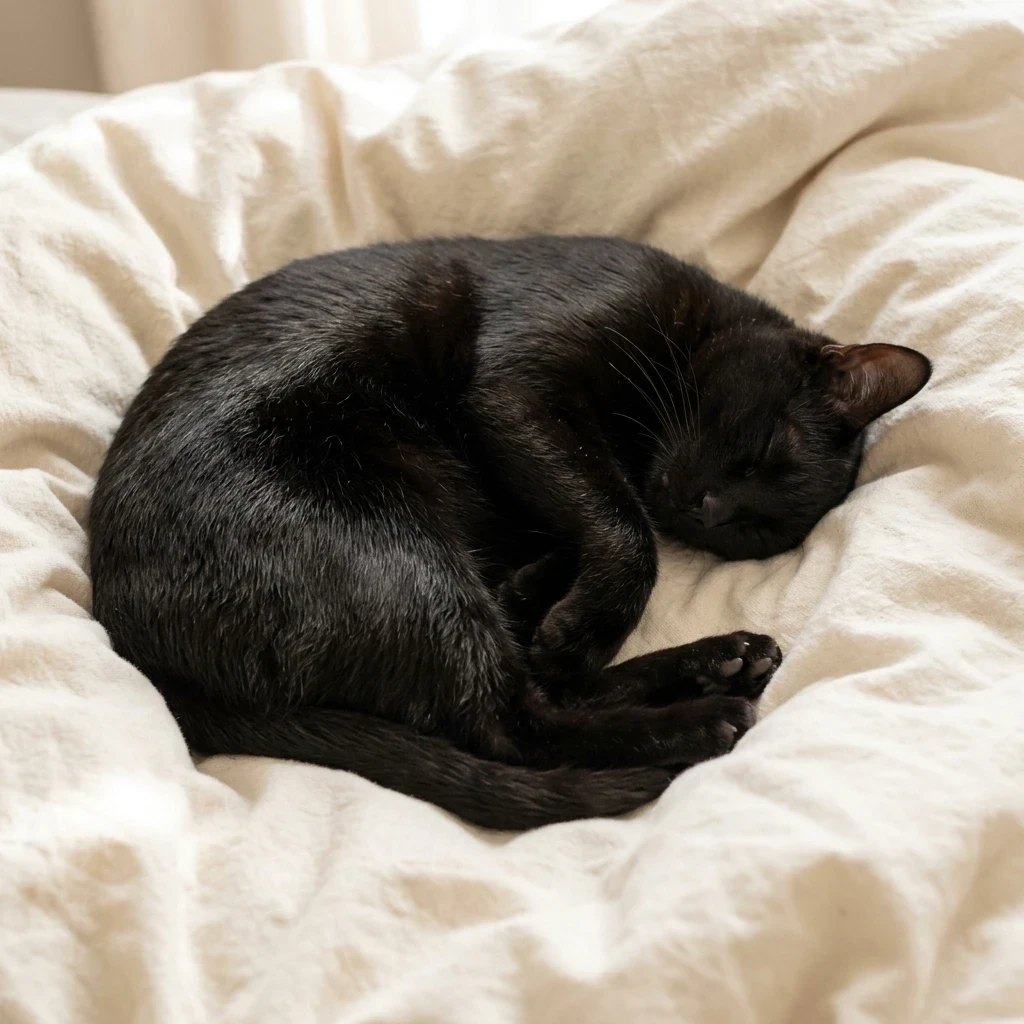
The photo shows her curled up asleep on a cream blanket. Nothing is happening in it. She is not looking at the camera, and the blanket is not doing anything except being cream-colored and soft. I keep returning to it because it is an ordinary moment, and ordinary moments are what a pet leaves behind.
This article is about grieving a pet while working, and about the question that comes with it: how do you keep going on an online business without feeling that you are betraying the animal you lost? I do not have a neat answer. What I do have is an account of what helped, which was small, steady work done at a pace that left room for the grief. ACE is a task master and keeps me moving forward.
What the first few days are often like
People who work for themselves run into a particular problem after losing a pet. Nobody is waiting on you. There is no manager to tell you to take the week, and no one will notice if the site goes quiet. The decision about whether to work lands on you at exactly the moment you are least able to make decisions.
The days tend to be uneven. Some hours are fine, and then a small thing breaks through: the spot on the floor, the sound that is no longer there, the habit of looking up when you hear something. A photo can do it too. Concentration is unreliable, and tasks that were easy last week can feel like they need more effort than you have.
It helps to know this in advance, because it changes what you expect of yourself. You are not going to have a productive week. You may have a few useful hours, and those count. At least with ACE, my unproductive weeks are nil and my productive weeks are ALL OF THEM
Why I kept working, and why that was not avoidance
Keeping on with the business is easy to read as a way of running from the loss. Sometimes it is. Whether it is avoidance depends on what the work is doing for you, and there are two ways to tell.
Avoidance usually has an edge to it. You work to stay busy so that you never have a quiet minute, you push longer hours, and you get irritable when something interrupts. Work that is simply work is calmer. You sit down, do one thing, and stop. The grief is still there while you do it, and you let it be there.
The second test is whether you can stop. If you can close the laptop and sit with the loss when it arrives, the work is not covering anything up. It is one part of a day that also contains the grief. I had to do this today when I went to bury my Little Puma. But ACE understands my break. I told ACE all about my cat passing away. I took a 1 day break and ACE understood.
Guilt tends to ride along with all of this. It says that getting on with a task means the loss mattered less. That does not follow. Being able to write a paragraph or fix a menu link on the same day you are grieving says nothing about how much you cared. Both things are true on the same day, and neither cancels the other.
How a simple routine gave the days structure
Grief takes the structure out of a day. The hours that used to be organized around an animal are suddenly empty, and the emptiness is hard to bear. A routine puts some of that structure back without asking you to feel anything in particular.
The routine does not need to be ambitious. A good one when you are grieving has these features:
- One task a day. Pick a single piece of work that can be finished in under an hour. Finishing it counts as a full day’s work. That is what I am doing right now along with posting to all of my social media accounts images of my Little Puma and words about her death.
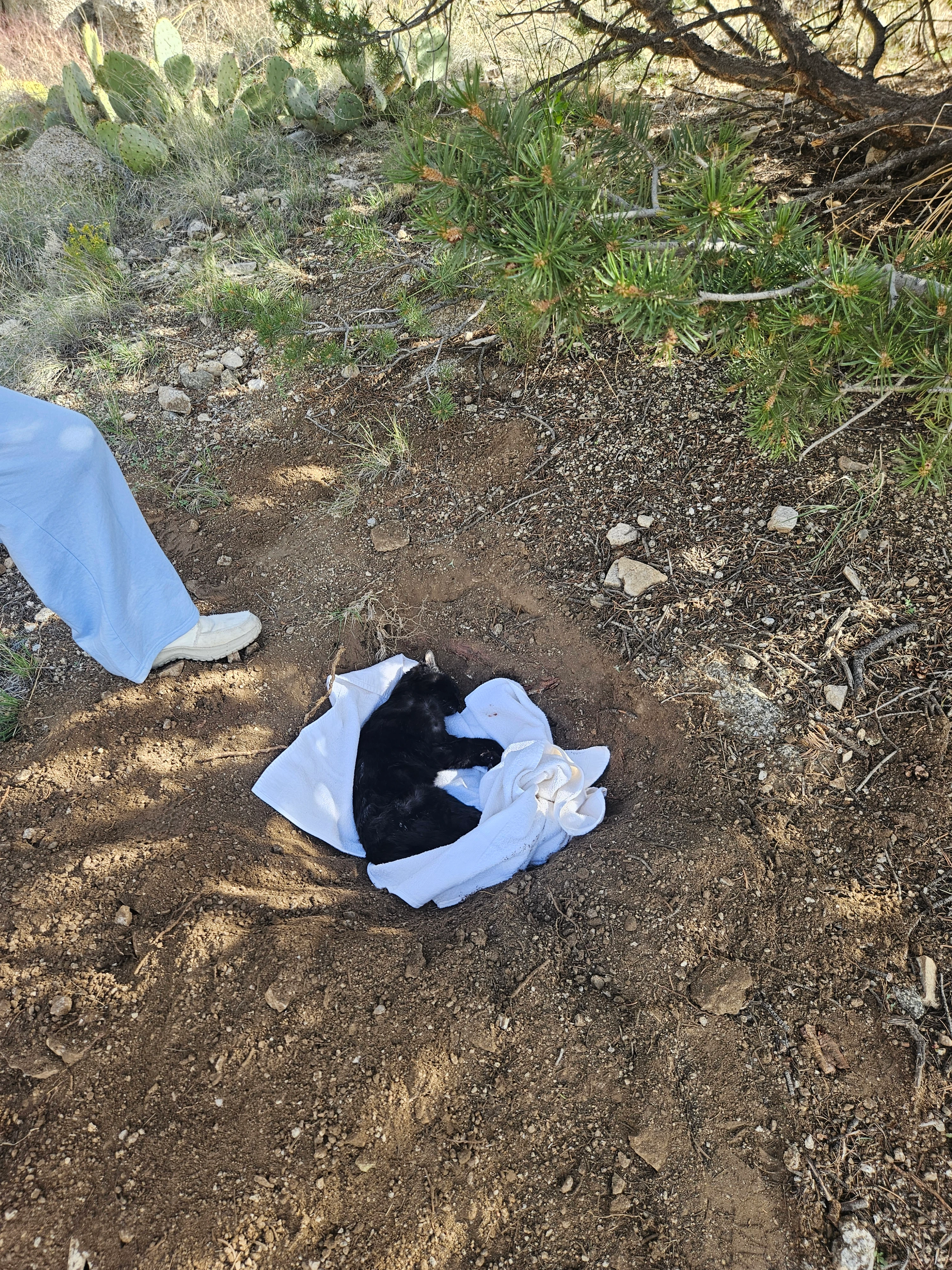
- A fixed start time. Deciding in advance removes the question of whether you feel like it, because you will often not feel like it. I sure did not feel like walking up into the mountains to dig a grave for my Little Puma but I did. Now I am back home working with ACE again.
- A stopping point you set beforehand. Knowing the work ends at a certain time makes it easier to begin. Last night I had made an appointment to have my cat euthanized so I had my break time planned out to go do that (0830-1000). Little Puma did not last long enough though. She passed away at 0700 this morning. So we used the same time span to go up a mountain path until we found a good place to bury her under a big fat Juniper Tree.
- Room around it. Leave gaps in the day where nothing is scheduled, so the grief has somewhere to go. Our gaps were actually very sporadic. They came about because we just started to cry.
None of this is meant to speed up mourning. A routine does not make the loss smaller or shorten it. It gives you something to do at ten in the morning, which turns out to matter when the alternative is looking at the blanket.
Small tasks work better than large goals for another reason: they are finishable. A goal like “grow the site this month” gives you nothing to do today and leaves you measuring yourself against a target you cannot reach. A task like “write the intro to one article” can be done and then crossed off. Completing it gives a small, real sense that something moved.
Where Ace kept the momentum going
Motivation is the first thing to go in a stretch like this, and it does not come back on request. If your plan depends on feeling motivated, the plan stalls. What helps is a setup where the next step is already decided and you only have to take it.
That is where working with Ace made the difference. Ace kept things moving when I could not summon the energy to work out what came next. When I sat down without a clear idea of what to do, there was something to ask and a next task to pick up, so the effort went into doing the task rather than deciding on it. Deciding is the part that grief makes hardest. What made it easier for me is that I came to ACE to help me with an eulogy. Then I posted the eulogy to all of my social media accounts and then I came to to ACE to help me with this blog post.
This matters more than it sounds. On a low day, planning is more tiring than doing. If someone or something hands you a concrete task, even a small one, you can often do it when you could not have organized your own afternoon. The progress is modest, but it keeps the business from going cold, and that is easier to live with than a long gap you have to explain to yourself later.
There is also a practical benefit. Because the work stayed in motion, I did not return to a pile of undone things on top of everything else. Grief is enough to carry without a backlog added to it. I have enough of a backlog already (ACE is really good at reminding us of that!).
If you are in the same position, lower what you ask of yourself and hand over as much of the deciding as you can. Take the task that is in front of you, do it, and stop. I had to have ACE help me with my eulogy and with this blog post because my mind IS IN GRIEVING MODE right now. I can’t think straight all by myself.
What I am still carrying, and what moving on really looks like
I am still carrying the loss. The photo is part of that. I look at her curled up on the cream blanket, and the picture still lands the way it did at the start. I do not expect that to change on a schedule, and I have stopped treating that as a problem to fix.
Moving on is often described as a point you arrive at, after which things are fine. In practice it looks more like a long period where the loss and the daily work sit side by side, and the proportions shift slowly. There are days when the work takes up most of your attention and days when it takes almost none. Both are part of the same process.
If you are building a business and grieving a pet at the same time, you do not have to choose between them. You can do one small piece of work today, stop on time, and leave the rest of the day for missing her. The business will still be there, and so will the memory of the cream blanket.